Welcome to the Indian Railway |
||||
 POSTPONEMENT OF EXAMINATION By 1895, India had started manufacturing its own locomotives. In no time, different kingdoms assembled their independent rail systems and the network extended to the regions including Assam, Rajasthan and Andhra Pradesh. In 1901, a Railway Board was formed though the administrative power was reserved for the Viceroy, Lord Curzon. The Railway Board worked under the guidance of the Deptt of Commerce and Industry. It was comprised of three members - a Chairman, a Railway Manager and an Agent respectively. BEWARE OF FAKE WEBSITESOn the occasion of India's Independence in 1947, the maximum share of the railways went under the terrain of Pakistan. On the whole, 42 independent railway systems with thirty-two lines were merged in a single unit and were acknowledged as Indian Railways. The existing rail networks were forfeited for zones in 1951 and 6 zones were formed in 1952. With 1985, the diesel and electric locomotives took the place of steam locomotives. In 1995, the whole railway reservation system was rationalized with computerization The content of this website should not be construed as an exhaustive statement of law.
1855, The year when the majestic Fairy Queen rolled out for the erstwhile East Indian Railway. For the first time after 1908, the Fairy Queen rolled again on Feb. 1st, 1997 from Delhi to Alwar. The steam engine is the oldest working engine in the world. Finding its pride of place in the Guinness Book of World Records and also capturing the National Tourism Award, this prestigious pristine beauty that graces the National Rail Museum, New Delhi, is steaming once again. The Queen, with the privileged ones aboard reaches the picturesque town of Alwar in Rajasthan the same day, from where the guests are taken to Sariska National Park. The selected guests will certainly go back with fond memories of a once-in-a lifetime experience. Go ahead and book your journey back into time. |
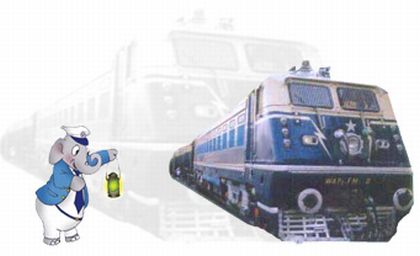 The novel plan for the introduction of a rail system, transformed the whole history of India. This innovative plan was first proposed in 1832; however no auxiliary actions were taken for over a decade. In the year 1844, private entrepreneurs were allowed to launch a rail system by Lord Hardinge, who was the Governor-General of India. By the year 1845, two companies were formed and the East India Company was requested to support them in the matter. WELCOME TO RRB KOLKATAThe credit from the UK investors led to the hasty construction of a rail system over the next few years. On 22nd Dec' 1851, the first train came on the track to carry the construction material at Roorkee in India. With a passage of one and a half years, the first passenger train service was introduced between Bori Bunder, Bombay and Thane on the providential date 16th Apr' 1853. HOW TO APPEAR
In the event of fulfilling the conditions of eligibility led down for the post, you will be issued a call letter well in advance of the day of examination.The call letter will also have a set of guidelines (enclosed) on to how to answer a question paper of multiple choice objective type. You must read these instructions carefully so that you have a good idea of the nature of the written examination before you actually appear for it.If you do not receive your call letter within a reasonable time before the date of examination, you can obtain a duplicate one only from RRB/Kolkata's premises on specified dates which shall be notified in the Employment News. Remember, you shall be given a duplicate call letter only if you are eligible in all respects and had originally been sent a call letter which did not reach you or contained errors. |
|||
